


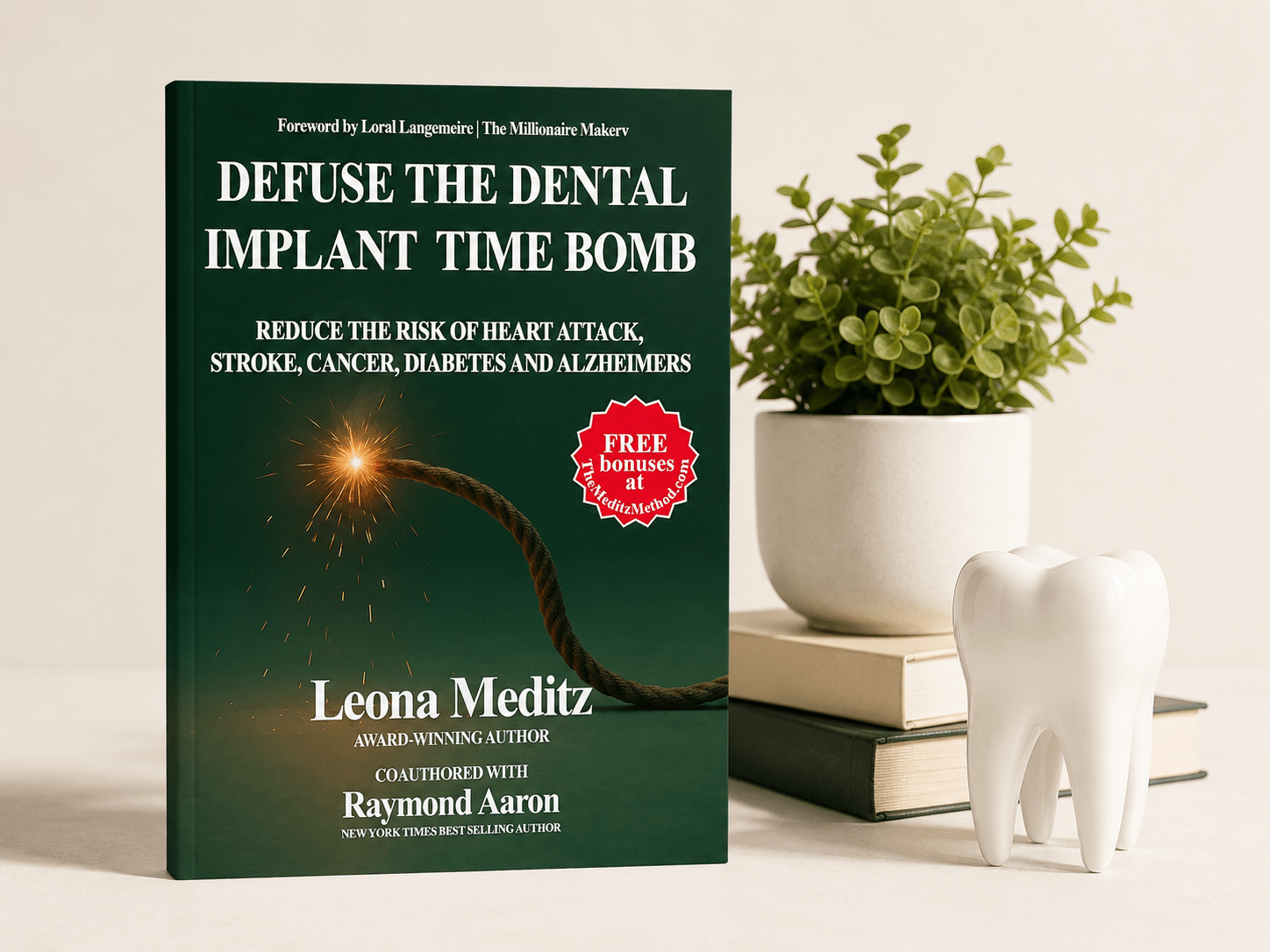
Dental implants have been called one of the greatest advances in modern dentistry. Millions of people have restored their smiles, regained confidence, and improved their ability to eat and speak because of dental implants.
But there is a question few patients are ever asked before they receive them:
What happens if the mouth isn’t healthy enough to support the implant for the rest of your life?
That question is the foundation of what I call the Dental Implant Time Bomb.
The Dental Implant Time Bomb isn’t the implant itself. It is the silent disease process that often exists underneath the surface—one that can begin years before an implant is placed and continue silently for years afterward until it causes devastating consequences.
The Silent Disease Most Patients Never Hear About
Many people lose their teeth because of periodontal disease (gum disease). When a tooth is extracted and replaced with an implant, patients are often told that the problem has been solved.
Unfortunately, removing the tooth does not necessarily eliminate the underlying causes that destroyed the tooth in the first place.
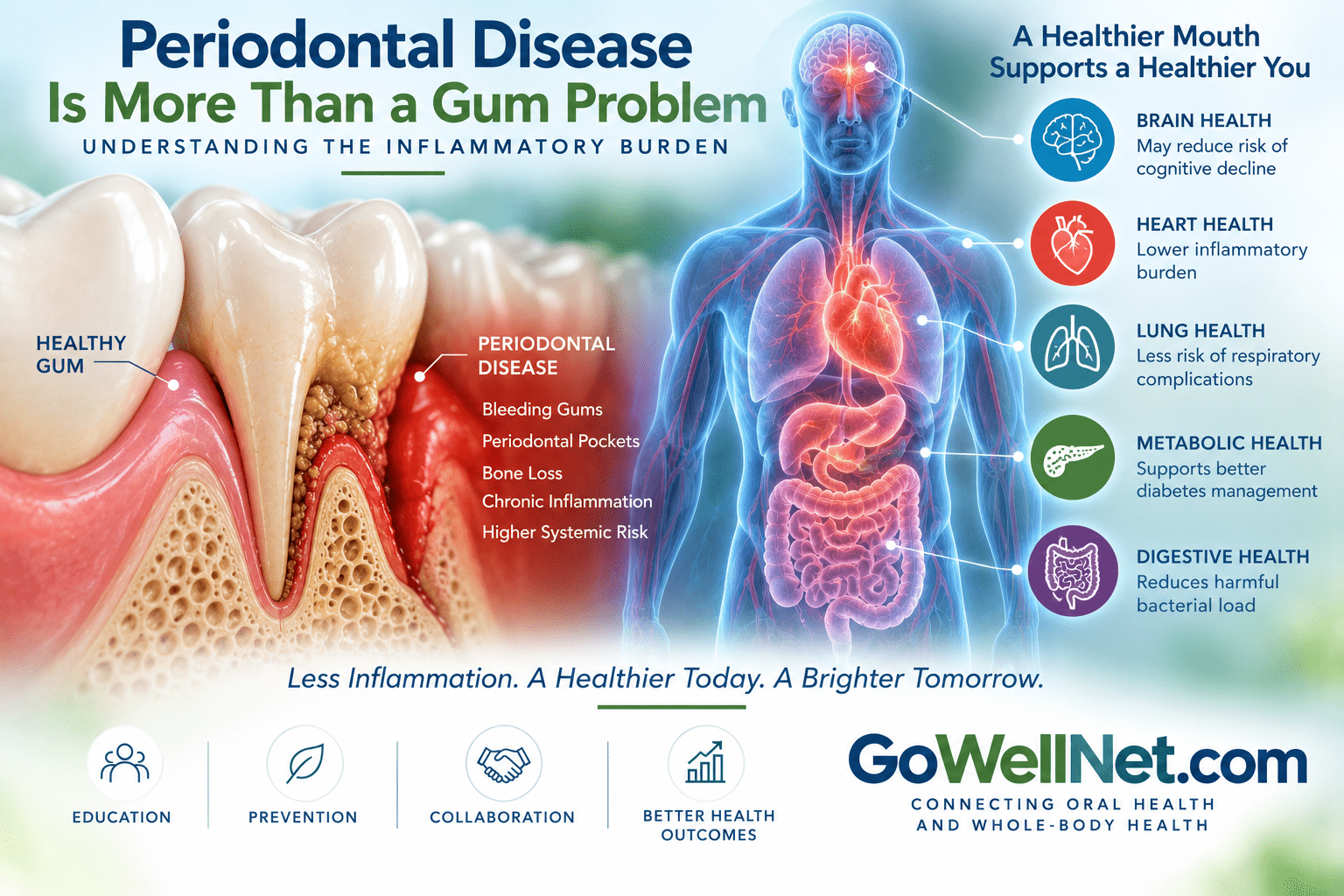
Periodontal disease is not simply an infection of the gums. It is a chronic inflammatory disease that destroys bone and connective tissue. The same bacteria and inflammatory pathways that damaged the natural tooth can also attack the tissues surrounding a dental implant.
If the cause of tooth loss is never identified and corrected, the patient may simply be replacing one problem with another.
That is the ticking time bomb.
Why Dental Implants Fail
Dental implants can be highly successful when placed in healthy patients and properly maintained. However, implants are not immune to disease.
Several factors increase the risk of implant complications and failure, including:
- Untreated or previously treated periodontal disease
- Chronic inflammation in the mouth
- Poor bone quality and density
- Vitamin D deficiency
- Uncontrolled diabetes or blood sugar imbalance
- Smoking and lifestyle factors
- Inadequate oral hygiene and maintenance
- Excessive bite forces or grinding
- Failure to identify systemic health issues affecting healing
- Lack of ongoing periodontal monitoring and care
The most significant risk factor for peri-implant disease is a history of periodontal disease. Patients who lost teeth because of gum disease remain at greater risk unless the biological causes of that disease are addressed. Studies have consistently demonstrated that periodontal disease and peri-implantitis share similar bacterial and inflammatory characteristics. Peri-implantitis is the inflammatory process that destroys the bone supporting dental implants and can ultimately lead to implant failure.
The Implant Isn’t the Problem—The Environment Is
Think of a dental implant as planting a tree.
You can purchase the healthiest tree available, but if you plant it in unhealthy soil, it cannot thrive.
Dental implants are no different.
The mouth is a living ecosystem. Healthy bacteria, oxygen levels, nutrition, immune function, bone metabolism, and systemic health all influence whether an implant survives and thrives for decades.
When patients are missing key health markers—such as healthy Vitamin D levels, controlled inflammation, adequate bone metabolism, and healthy periodontal tissues—the implant is being placed into compromised soil.
The implant may function beautifully for years while the underlying disease silently progresses.
That’s why it is called a time bomb.
The Bigger Problem: It’s Not Just About Teeth
Perhaps the most concerning aspect of the Dental Implant Time Bomb is that it isn’t only about losing an implant.
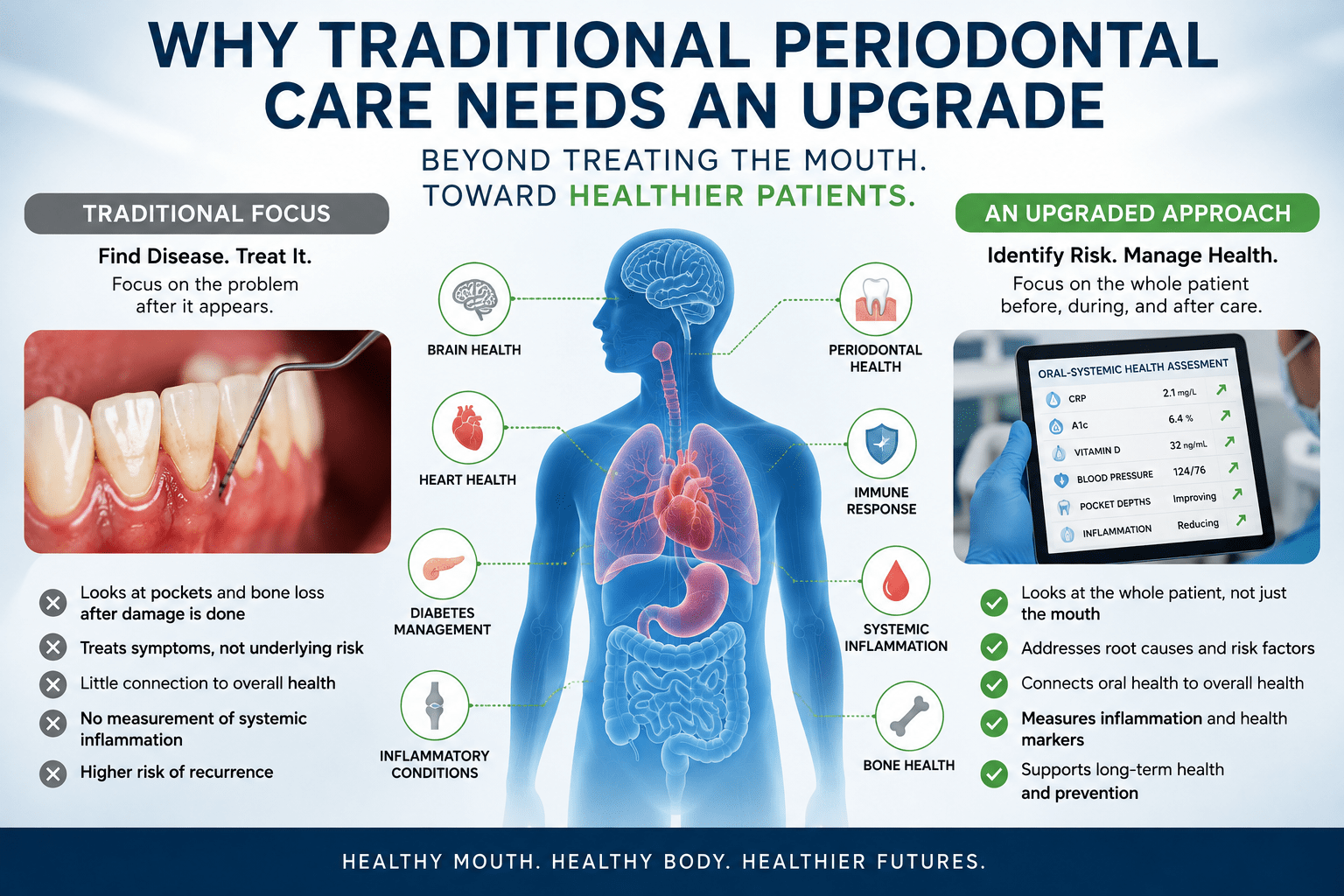
The same inflammatory processes that contribute to periodontal disease and peri-implant disease are associated with serious systemic health conditions, including:
- Cardiovascular disease
- Stroke
- Diabetes
- Alzheimer’s disease
- Certain cancers
- Rheumatoid arthritis
- Pregnancy complications
The mouth is not separate from the body. Chronic oral inflammation affects the entire immune system.
When we ignore the biological causes of oral disease, we may be ignoring early warning signs of much larger health problems.
Prevention Is Possible
The good news is that the Dental Implant Time Bomb can be diffused.
Before placing or restoring dental implants, patients should undergo a comprehensive oral-systemic health evaluation that includes:
- Periodontal risk assessment
- Bone health evaluation
- Vitamin D testing
- Inflammatory marker screening when appropriate
- Salivary diagnostic testing
- Blood sugar evaluation
- Assessment of lifestyle and nutritional factors
- Long-term implant maintenance planning
Dental implants should never be viewed as a lifetime guarantee simply because they are made of titanium or zirconia. Their success depends largely on the health of the patient and the environment in which they are placed.
The Takeaway
Dental implants are extraordinary tools—but they are not miracle cures.
If the disease process that caused tooth loss remains untreated, the biological clock may already be ticking long before an implant is placed.
The Dental Implant Time Bomb is not about fear. It is about awareness.
Patients deserve to understand why teeth were lost, how their overall health influences implant success, and what they can do to protect both their smiles and their lives.
When we stop treating dental implants as mechanical replacements and start treating patients as whole human beings, we can diffuse the Dental Implant Time Bomb—before it ever begins ticking.
To buy Diffuse the Dental Implant Book go to https://TheMeditz Method.com/shop or Amazon.com






Leave A Comment
You must be logged in to post a comment.