


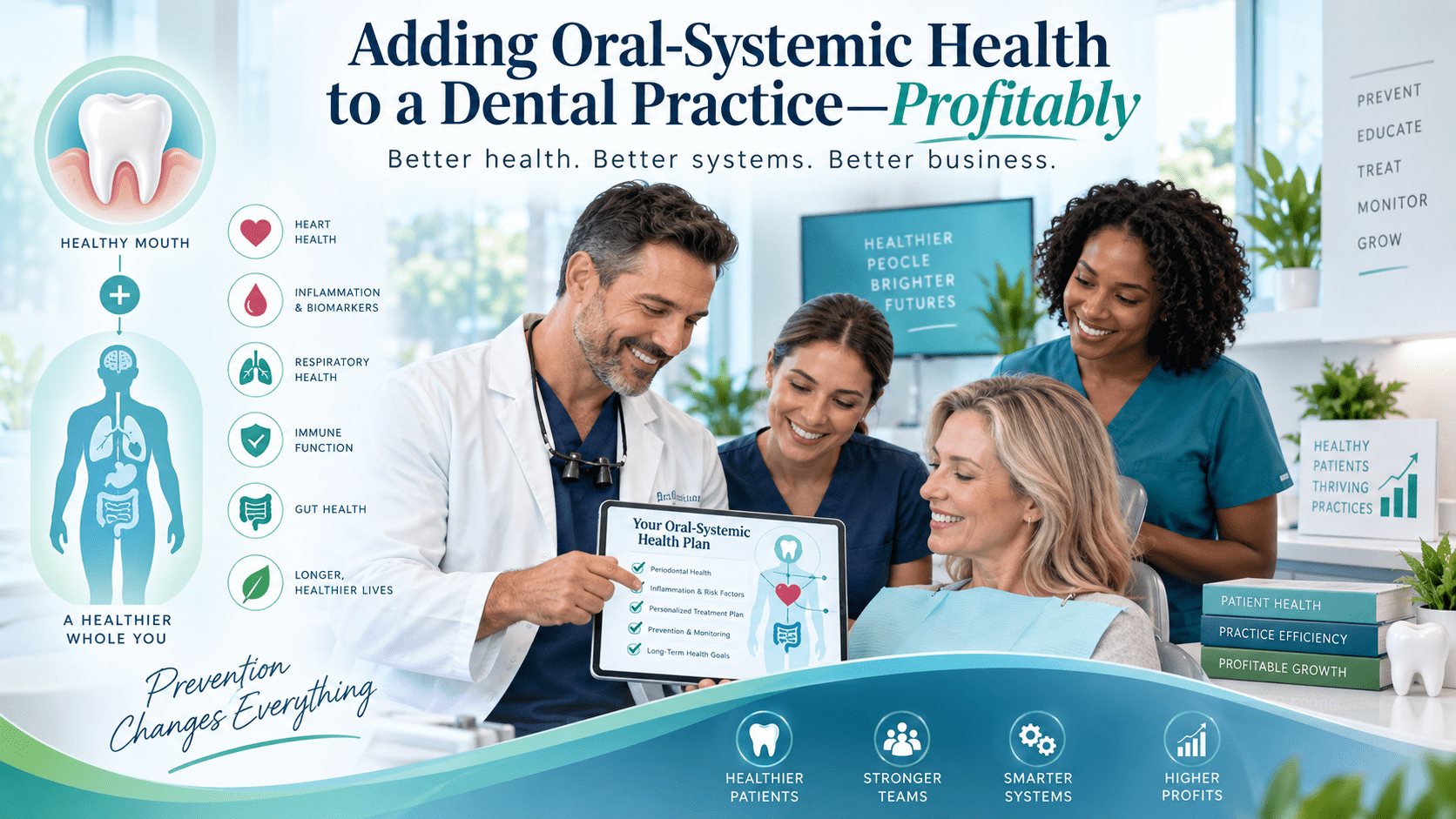
Better Health and Better Business Don’t Have to Compete
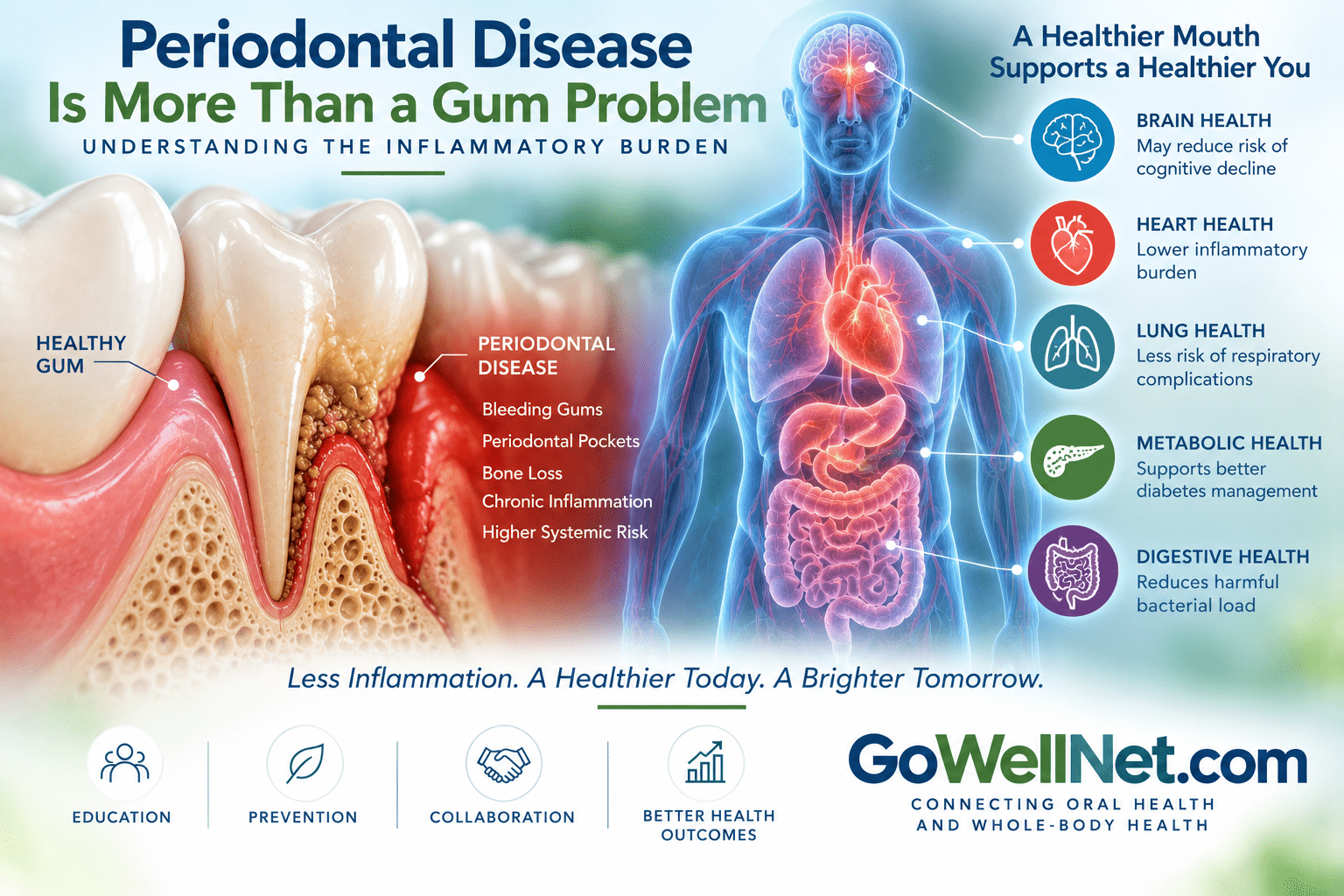
Many dentists understand the importance of oral-systemic health.
They recognize that periodontal inflammation, blood sugar regulation, cardiovascular risk, bone health, sleep, nutrition, and the oral microbiome can influence the way patients respond to dental treatment.
The challenge is not necessarily believing in oral-systemic dentistry.
The challenge is implementing it profitably.
Too often, practices add new technology, testing, products, or protocols without first designing a system around them. The result can be longer appointments, confused team members, inconsistent recommendations, poor patient acceptance, and increased overhead.
Oral-systemic health should not become another task your team has to squeeze into an already busy day.
Done correctly, it becomes a practice model that improves patient care while creating additional value, revenue, and long-term patient relationships.
Start With the Practice Model—Not the Technology
One of the biggest mistakes practices make is starting with equipment.
They buy a laser.
They introduce salivary testing.
They add supplements.
They begin checking biomarkers.
They invest in new home-care products.
Then they ask:
“Now how do we get the team to use all of this?”
Reverse the process.
Before adding anything, determine how oral-systemic health will fit into your existing patient journey.
Map the process from:
Assessment → Diagnosis → Patient Education → Treatment → Home Care → Re-evaluation → Maintenance
Every team member should understand where they fit into that process.
Technology should support the system.
The system should not be built around the technology.
1. Expand the Value of the Comprehensive Exam
The comprehensive examination can become the foundation of an oral-systemic practice.
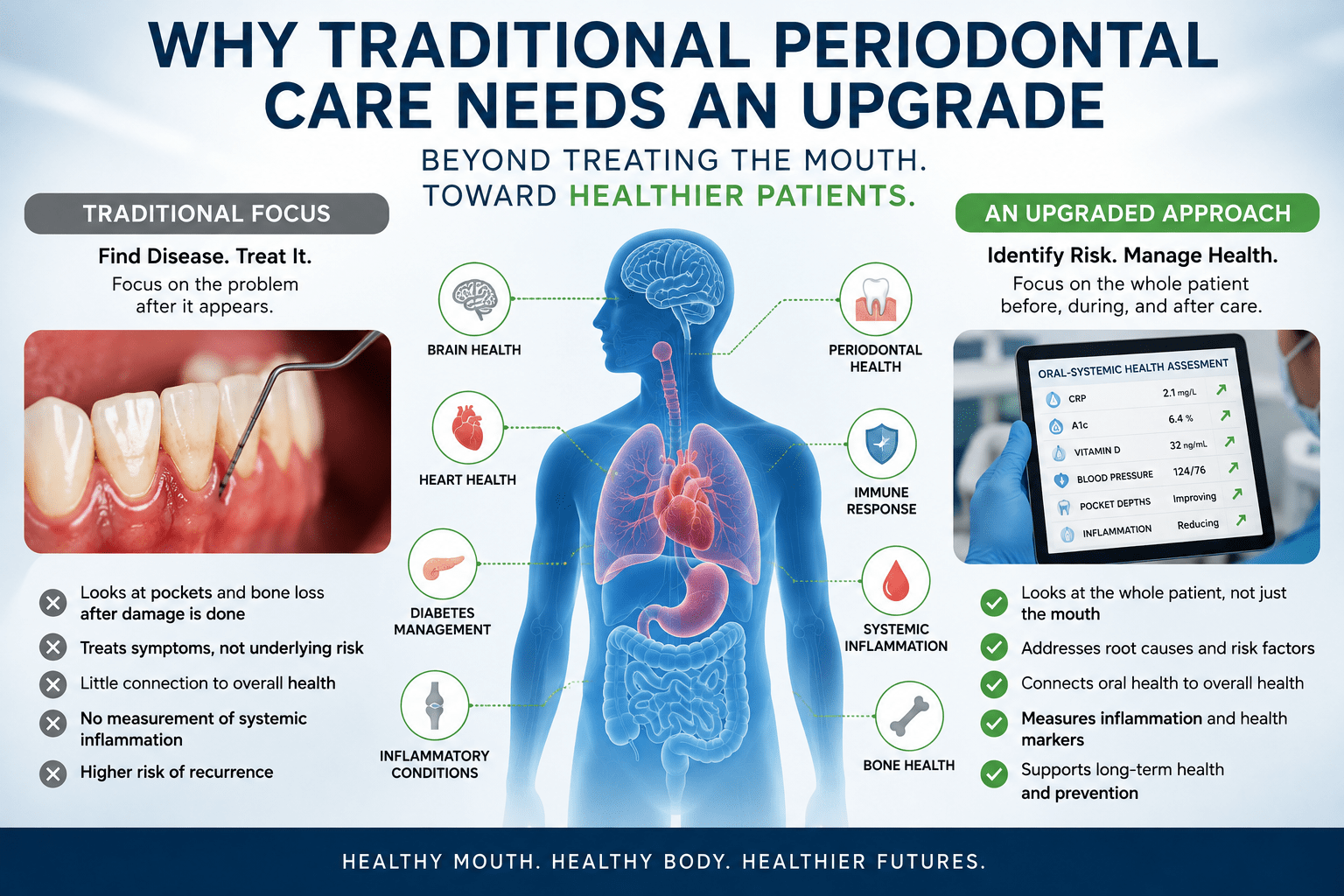
Instead of looking only for cavities, broken teeth, periodontal pockets, or restorative needs, begin identifying broader risk factors.
Depending on the practice and patient, this may include:
- Periodontal inflammation
- Bleeding and pocket depth
- Bone loss
- Implant health
- Oral microbiome findings
- Blood pressure
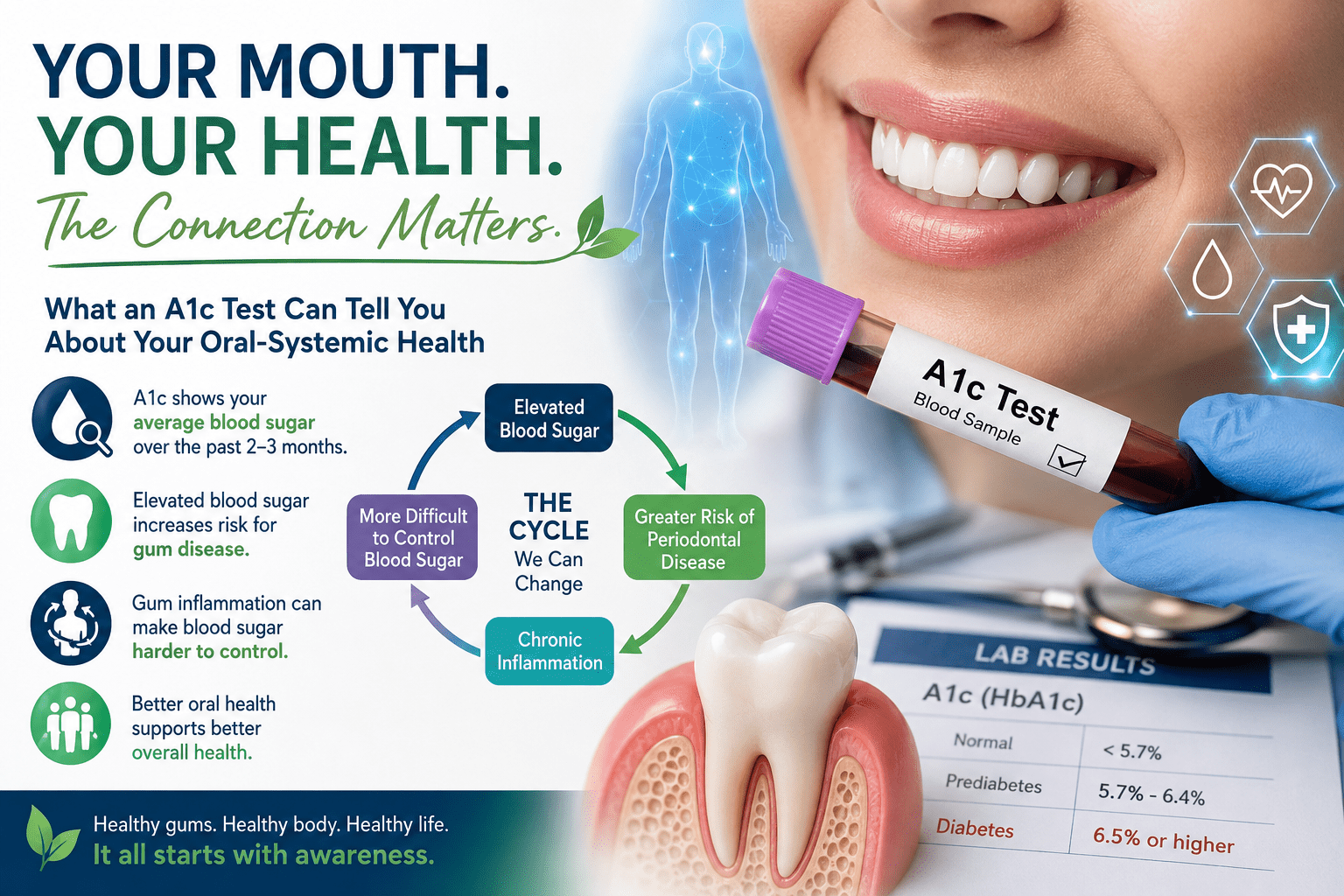
- A1c
- C-reactive protein
- Vitamin D
- Smoking or vaping
- Nutrition
- Sleep
- Existing systemic conditions
- Medications
- Family history
The goal is not for the dentist to become the patient’s physician.
The goal is to recognize information that may affect dental health, treatment outcomes, healing, inflammation, and long-term stability—and collaborate with the appropriate healthcare professional when necessary.
This transforms the dental examination from simply identifying dental problems into identifying risk.
And risk creates a much more meaningful conversation with patients.
2. Make Periodontal Health the Foundation
Oral-systemic health cannot simply be an additional service layered on top of traditional hygiene.
It should begin with controlling oral inflammation.
That means creating clear protocols for identifying periodontal disease, treating it appropriately, and monitoring the patient’s response.
Your hygiene department can become one of the most important drivers of an oral-systemic practice.
Instead of the hygiene appointment being viewed primarily as “a cleaning,” it becomes an opportunity to:
Measure. Educate. Treat. Re-evaluate.
Depending on the patient’s condition and the practice’s protocols, care may include:
- Comprehensive periodontal charting
- Scaling and root planing
- Laser-assisted periodontal therapy
- Microbial or salivary testing
- Personalized home-care recommendations
- Periodontal re-evaluation
- More appropriate maintenance intervals
When patients understand that periodontal care is about controlling chronic inflammation—not simply cleaning their teeth—the value of treatment changes dramatically.
3. Measure What You Are Trying to Improve
Patients understand numbers.
Instead of saying:
“Your gums look better.”
Show them.
Compare:
- Bleeding
- Pocket depth
- Inflammation
- Microbial findings
- Bone stability
- A1c
- CRP
- Vitamin D
- Other appropriate health indicators
When patients can see measurable improvement, they become participants in their health rather than passive recipients of dental treatment.
Measurement also gives the dental team confidence.
The conversation changes from:
“We think this might help.”
to:
“Here is where you started, here is what we changed, and here is what improved.”
That distinction can dramatically improve patient understanding and treatment acceptance.
4. Stop Selling Procedures—Start Explaining Risk
One of the most important financial changes an oral-systemic practice can make is changing the patient conversation.
Traditional dentistry often sounds like this:
“You need a crown.”
“You need scaling and root planing.”
“You need an implant.”
“You need a nightguard.”
To the patient, these can sound like isolated procedures with large price tags.
An oral-systemic conversation starts earlier.
Why did the problem occur?
What happens if the underlying cause continues?
What could threaten this treatment in the future?
What can we do to reduce that risk?
When patients understand the reason behind treatment, dentistry becomes less transactional.
The dentist is no longer simply selling a crown, implant, periodontal procedure, or appliance.
The practice is helping the patient protect their health and their investment.
5. Build Home Care Into the Treatment Plan
Your clinical results depend heavily on what happens during the other 8,700-plus hours each year when the patient is not sitting in your dental chair.
That makes home care part of treatment—not an afterthought.
Patients need clear instructions.
Not:
“Brush better.”
Instead:
Swish. Floss. Brush. Repeat.
Recommend products based on the environment you are trying to create in the mouth.
The goal is to help patients maintain healthier gums, control plaque and inflammation, support a balanced oral environment, and protect the dentistry you have completed.
For practices using Clean Kiss Oral Health, home care can become an extension of the same oral-systemic philosophy being taught in the dental office.
That creates continuity between professional care and daily patient behavior.
6. Train the Entire Team to Tell the Same Story
Oral-systemic health will struggle if only the dentist believes in it.
Imagine the dentist explaining the importance of inflammation while another team member tells the patient:
“You’re just here for your cleaning.”
The message collapses.
Everyone should understand:
- Why the practice is changing
- What oral-systemic health means
- How the practice identifies risk
- How treatment recommendations are made
- How results are measured
- How home care supports treatment
- How each team member explains the philosophy
The hygienist, assistant, treatment coordinator, scheduling coordinator, and dentist should all be communicating the same core message.
Consistency creates confidence.
Confidence creates acceptance.
7. Create a Specific Patient Workflow
A profitable system needs repeatability.
A patient entering an oral-systemic practice might move through a pathway such as:
Risk Assessment
↓
Comprehensive Clinical Evaluation
↓
Periodontal and Oral-Systemic Findings
↓
Patient Education
↓
Personalized Treatment Plan
↓
Professional Therapy
↓
Home-Care Protocol
↓
Re-evaluation
↓
Maintenance and Monitoring
Once that workflow is documented, it becomes teachable.
When it becomes teachable, it becomes scalable.
And when it becomes scalable, the practice is no longer dependent on one enthusiastic hygienist or one dentist remembering to have the conversation.
8. Track the Business Numbers Too
If you want oral-systemic health to become a permanent part of your practice, measure its financial performance just as carefully as you measure clinical outcomes.
Track indicators such as:
- Periodontal diagnosis rate
- Periodontal treatment acceptance
- Comprehensive treatment acceptance
- Average production per hygiene visit
- Reappointment percentage
- Case acceptance
- Home-care participation
- New-patient conversion
- Patient retention
- Production per provider hour
- Percentage of patients receiving appropriate periodontal therapy
You may discover that the greatest opportunity is not attracting hundreds of new patients.
It may be providing more comprehensive care to the patients already sitting in your chairs.
9. Don’t Add More Work—Redesign the Work
This distinction is critical.
Oral-systemic health should not mean:
More tests + more forms + more appointments + more stress.
It should mean:
Better systems + better conversations + better diagnosis + better treatment planning + better follow-up.
The objective is not to make appointments longer indefinitely.
The objective is to make them more valuable.
When the system is properly designed, the practice can improve patient care while increasing productivity without requiring the team to constantly run faster.
The Most Profitable Procedure May Be Prevention
Dentistry has traditionally generated significant revenue repairing damage after it occurs.
But patients increasingly want to know:
Why did this happen?
And more importantly:
How do I keep it from happening again?
That creates an enormous opportunity for dentistry.
A practice built around oral-systemic health can move beyond repairing disease toward identifying risk, controlling inflammation, protecting existing dentistry, supporting implant longevity, and helping patients maintain their teeth and health for life.
That is good healthcare.
It can also be very good business.
The Meditz Method™: Turning Oral-Systemic Health Into a System
The Meditz Method™ was created to help dental practices move from understanding oral-systemic health to actually implementing it.
The goal is not to add another disconnected program to the practice.
It is to create a repeatable system that integrates:
Diagnostics
Periodontal Therapy
Health Risk Assessment
Patient Education
Medical-Dental Collaboration
Personalized Home Care
Re-evaluation
Team Training
Practice Systems and Profitability
Because oral-systemic dentistry works best when the entire practice works together.
There is no single test, product, laser, supplement, or technology that creates an oral-systemic practice.
There is no silver bullet.
There is a system.
And when clinical excellence, team implementation, patient communication, and sound business systems work together, oral-systemic health can become more than another service.
It can become the foundation of a healthier patient—and a healthier dental practice.
The Meditz Method™
Creating a culture of prevention by connecting the mouth to the whole body.
Leona Meditz has helped create oral systemic health systems for health care practitioners since 2001.
Schedule time to talk at https://gowellnet.com/book-Leona




Leave A Comment
You must be logged in to post a comment.