


The Simple Blood Test That Can Reveal a Bigger Health Story
When you think about your mouth, you probably think about your teeth, gums, brushing, flossing, and dental cleanings.
But your mouth is not separate from the rest of your body.
The health of your gums can influence systemic inflammation, and systemic conditions can influence the health of your mouth. One of the simplest laboratory tests that can help reveal this connection is the A1c test.
An A1c is more than a diabetes test. It can provide an important window into how your body has been managing blood sugar over the previous several months—and that information can be highly relevant to oral health.
What Is an A1c?
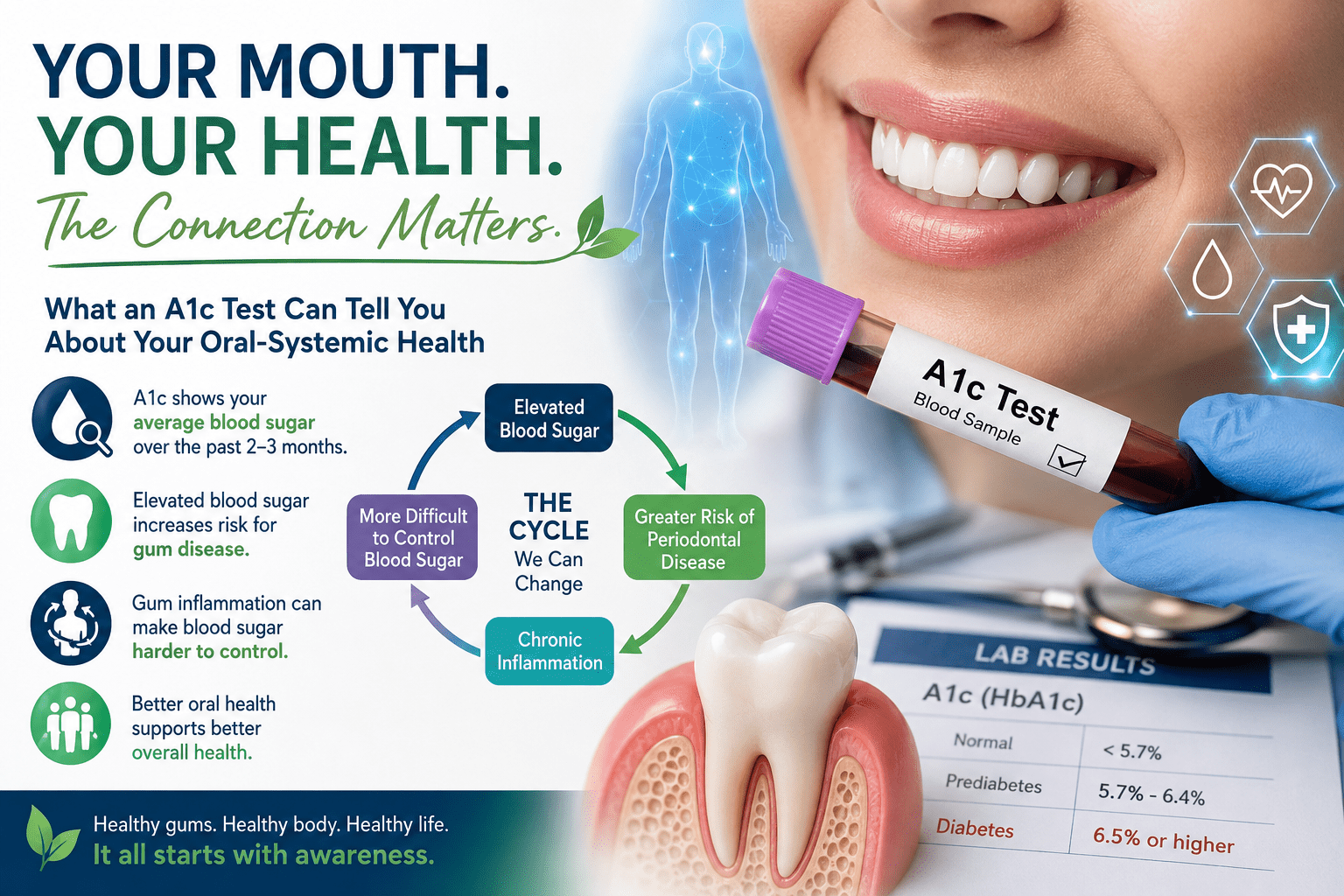
Hemoglobin A1c, commonly called A1c or HbA1c, measures the percentage of hemoglobin in your red blood cells that has glucose attached to it.
Because red blood cells typically circulate for about three months, the A1c provides an estimate of your average blood glucose levels over roughly the previous 2–3 months.
Unlike a fasting glucose test, which represents your blood sugar at one point in time, A1c gives a broader picture.
In general:
- Below 5.7% is considered the normal range.
- 5.7%–6.4% is considered the prediabetes range.
- 6.5% or higher is consistent with diabetes when confirmed according to clinical guidelines.
An A1c result should always be interpreted in the context of the individual patient and, when appropriate, confirmed with additional testing.
Why Should Dentists Care About A1c?
Because elevated blood sugar and periodontal disease can be connected in both directions.
People with diabetes are at increased risk for periodontal disease, and poorly controlled blood sugar can make it more difficult for the body to respond effectively to periodontal infection.
At the same time, periodontal disease is a chronic inflammatory condition. The inflammation associated with periodontal disease may make blood-glucose control more difficult in people with diabetes.
This creates a potentially important cycle:
Elevated blood sugar → greater susceptibility to periodontal problems → chronic oral inflammation → increased systemic inflammatory burden → potentially more difficulty controlling blood sugar.
That is why an A1c can become an important piece of the oral-systemic health puzzle.
Your Mouth May Be Giving You Clues
A patient may have:
- Bleeding gums
- Deep periodontal pockets
- Bone loss
- Recurrent periodontal infection
- Delayed healing
- Increased inflammation
- Loose teeth
- Recurrent dental infections
These findings should not automatically be attributed to diabetes. However, they may be reasons to look more closely at the patient’s overall health—including blood-glucose regulation.
Likewise, a patient with an elevated A1c may need a more intentional approach to periodontal evaluation and prevention.
The mouth can sometimes be an early warning system.
A1c and Periodontal Disease: A Two-Way Relationship
The relationship between diabetes and periodontal disease is one of the best examples of why oral health should be considered part of whole-body health.
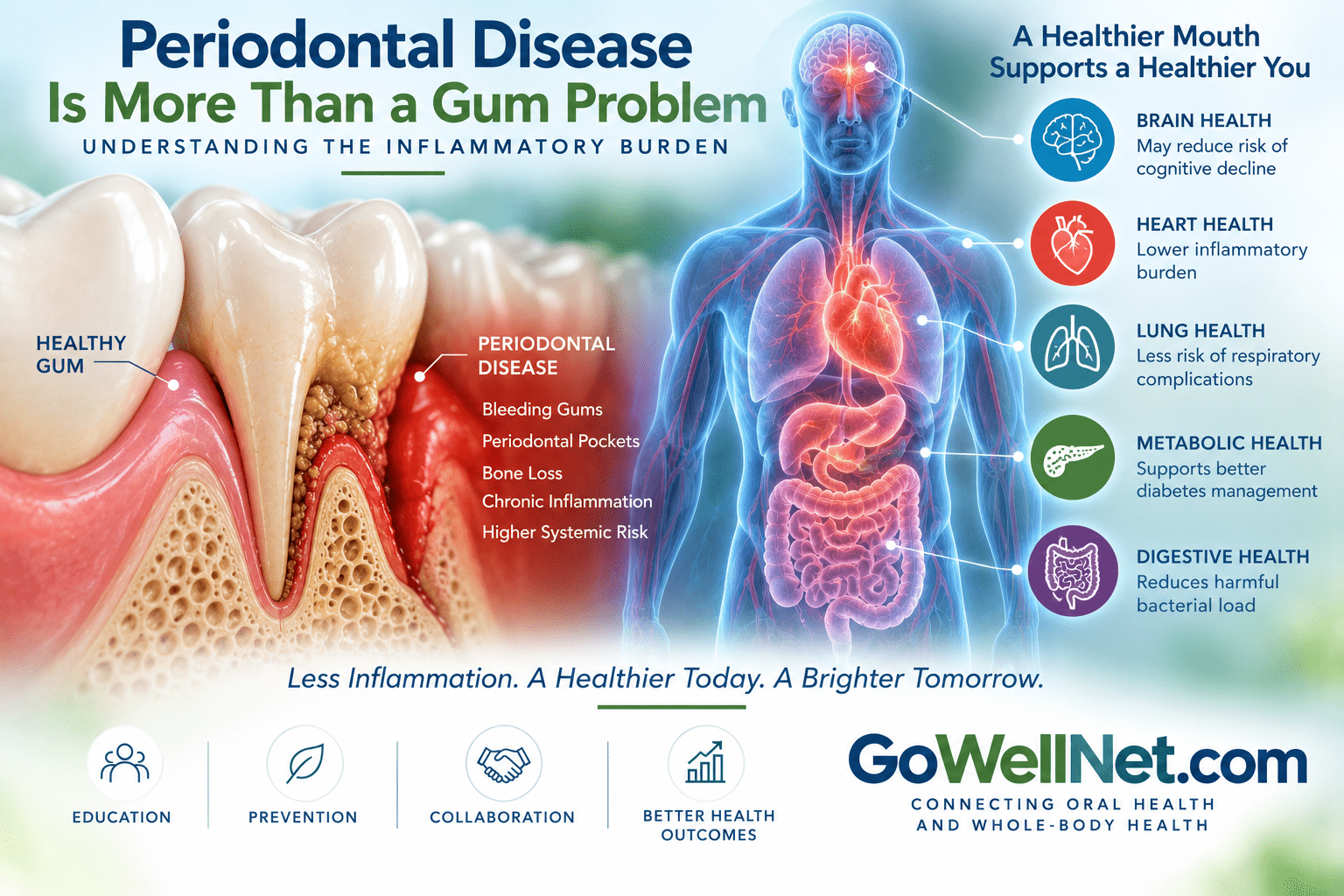
Diabetes can affect the body’s immune and inflammatory responses, blood vessels, wound healing, and susceptibility to infection. These changes can make periodontal disease more difficult to control.
Periodontal inflammation, meanwhile, contributes to the body’s overall inflammatory burden.
Research has also found that treating periodontal disease can produce modest improvements in glycemic control in people with diabetes, although periodontal treatment should not be considered a substitute for medical diabetes management.
This is where collaboration between the dental and medical teams becomes powerful.
A1c Can Help Start a Conversation
Imagine a dental patient whose periodontal examination reveals significant inflammation.
Instead of simply saying:
“You need to floss better.”
An oral-systemic approach asks additional questions:
What is causing the inflammation?
How is the patient’s blood sugar?
When was the patient’s last A1c?
Does the patient have diabetes or prediabetes?
What medications are they taking?
How is their blood pressure?
Are there other signs of systemic inflammation or metabolic dysfunction?
These questions don’t replace a dental examination or medical evaluation.
They make the conversation bigger.
The A1c Is One Piece of the Puzzle
An A1c should never be viewed in isolation.
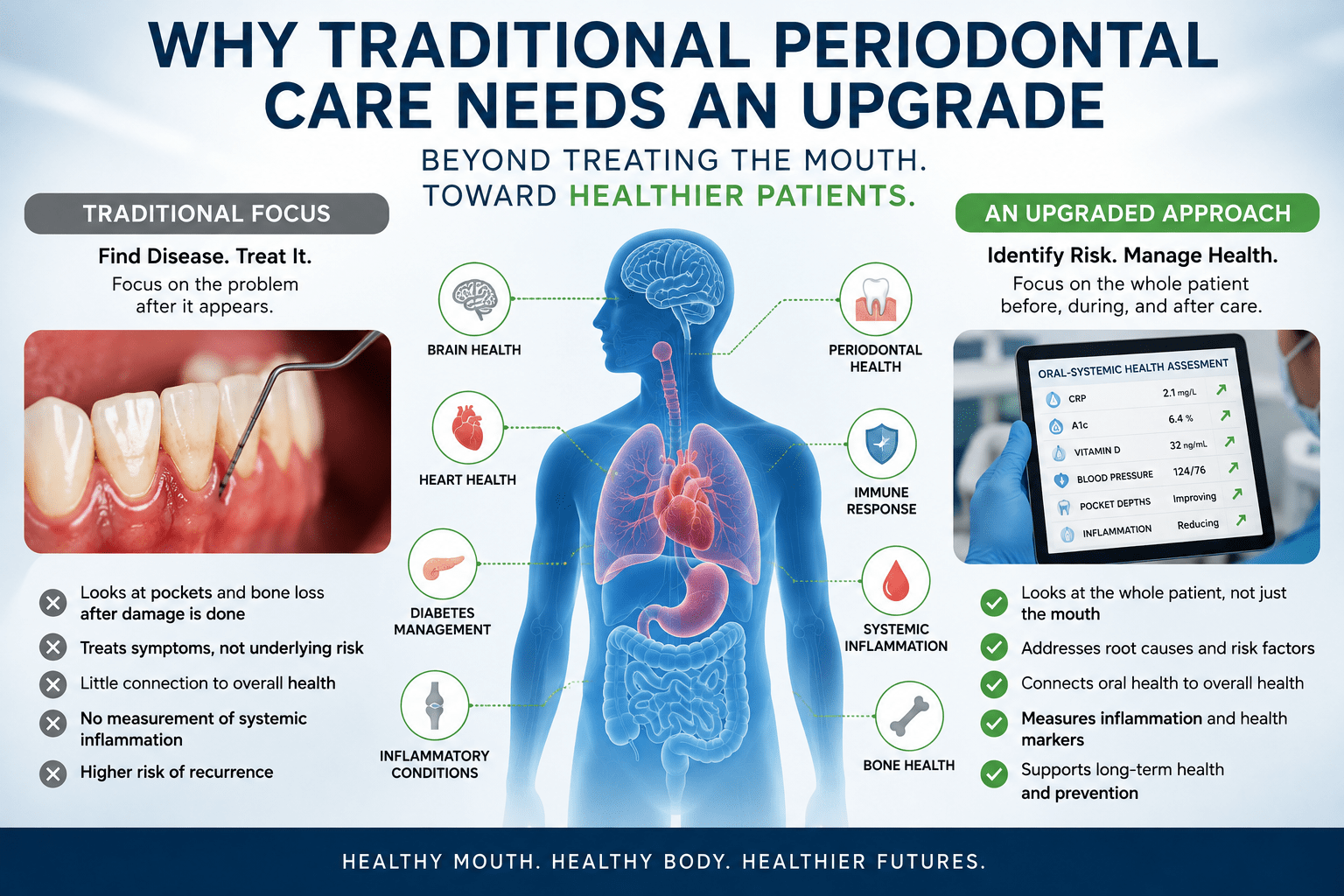
A comprehensive oral-systemic health assessment may also consider factors such as:
- Blood pressure
- A1c
- C-reactive protein (CRP)
- Vitamin D
- Lipid profile
- Medical history
- Family Health History
- Medications
- Smoking or tobacco use
- Diet and nutrition
- Periodontal measurements
- Bone loss
- Signs of infection and inflammation
The goal is not for the dental office to diagnose every systemic disease.
The goal is to recognize when the mouth may be telling us something important about the patient.
From Treating Teeth to Treating the Patient
Traditional dentistry has often focused primarily on the teeth and gums.
Oral-systemic health expands the conversation.
A periodontal pocket isn’t simply a measurement.
Bleeding isn’t simply a nuisance.
Inflammation isn’t simply a dental problem.
And an A1c isn’t simply a number used by a physician.
Together, these pieces can tell a much larger story about a person’s health.
The dental team is uniquely positioned to see patients regularly, evaluate inflammation directly, and recognize changes that may warrant further medical evaluation.
The Bigger Question
Perhaps the most important question isn’t:
“What is your A1c?”
It is:
“What is your A1c telling us about your health—and what is your mouth telling us about your A1c?”
When dentists and physicians begin communicating around these connections, patients can receive a more complete picture of their health.
The future of dentistry isn’t simply about saving teeth.
It’s about understanding that the mouth is part of the body—and oral health is part of whole-body health.
A1c: A Small Test With a Big Message
An A1c can provide valuable information about long-term blood-sugar control. When combined with a thorough periodontal examination and other health indicators, it can help dental professionals recognize patients who may benefit from a deeper conversation with their healthcare provider.
Your mouth may be telling you more about your health than you realize.
This article is for educational purposes and is not intended to diagnose or treat diabetes or any other medical condition. A1c results should be interpreted by a qualified healthcare professional. A1c tests can be obtained from physicians, dentists or from https:cleankiss.com/shop






Leave A Comment
You must be logged in to post a comment.