


Bleeding gums are common.
That does not make them healthy.
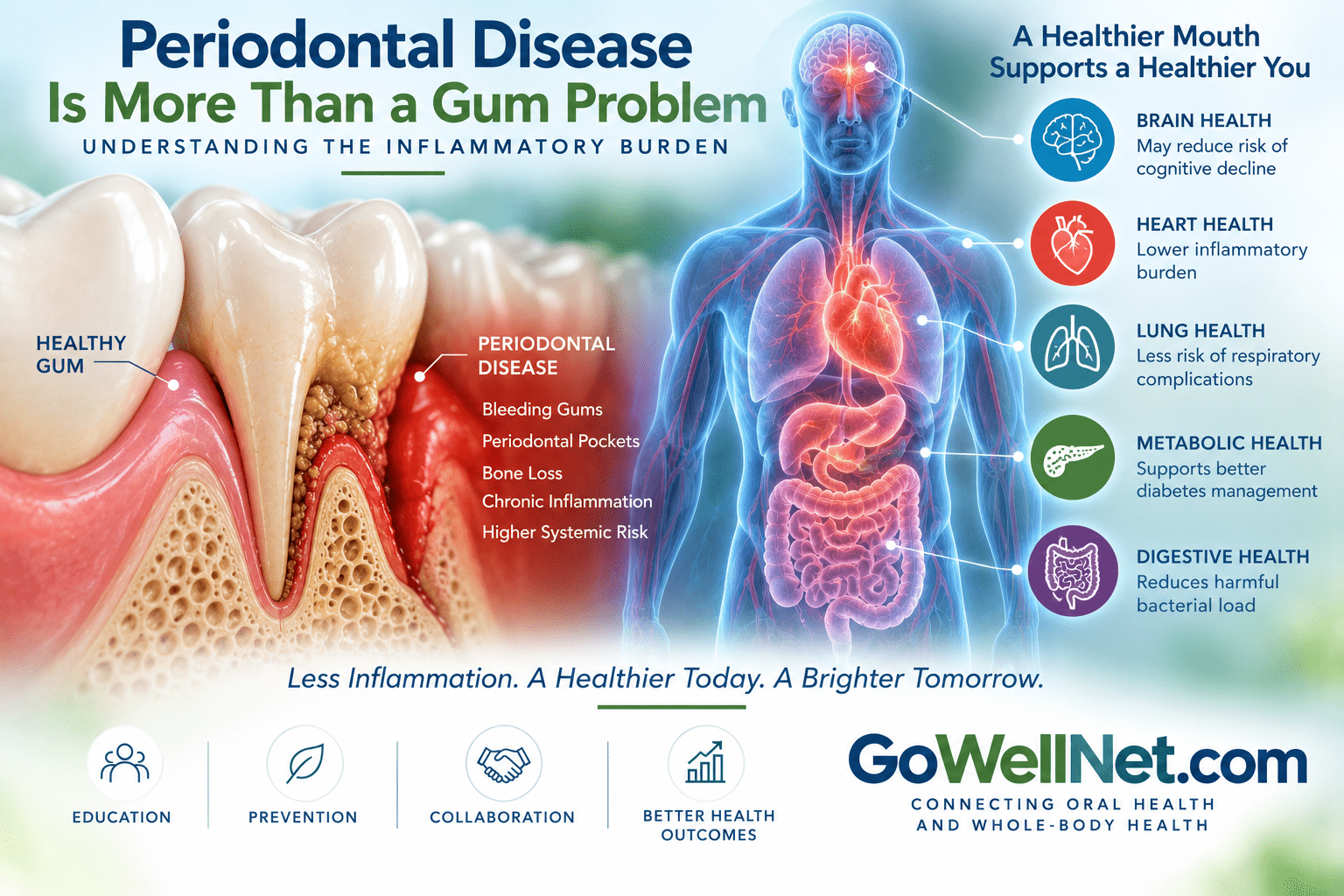
When gums bleed repeatedly, particularly in the presence of periodontal pocketing, attachment loss, or bone loss, the body may be signaling an ongoing inflammatory response to microbial challenge.
That makes periodontal disease more than a problem involving teeth and gums.
It is a chronic inflammatory disease occurring in a highly vascular area of the body.
What Happens During Periodontal Disease?
The mouth contains a complex microbial ecosystem.
Many oral microorganisms are compatible with health. Problems develop when the microbial community becomes disrupted and pathogenic organisms gain an advantage.
The immune system responds.
Initially, that response is protective. But when microbial challenge persists, inflammation can become chronic.
Over time, the combination of dysbiosis and an inappropriate or prolonged inflammatory response can contribute to destruction of the tissues and bone supporting the teeth.
The result may include:
- Bleeding gums
- Periodontal pockets
- Gum recession
- Loss of attachment
- Bone loss
- Tooth mobility
- Eventually, tooth loss
But the biological story does not necessarily stop at the gumline.
A Gateway Between the Mouth and Circulation
Periodontal pockets create an inflamed environment around the teeth.
As periodontal disease progresses, the pocket lining may become ulcerated. This can provide a pathway through which bacteria, bacterial components, and inflammatory mediators interact with the bloodstream and immune system.
Researchers continue to study how these mechanisms may contribute to systemic inflammatory burden and why periodontal disease is associated with several chronic diseases.
Association does not automatically prove causation.
That distinction matters.
But it is equally important not to dismiss chronic periodontal inflammation simply because it begins in the mouth.
Inflammation Is the Common Language
Inflammation is essential to healing and immune defense.
The problem is persistent inflammation.
Chronic inflammatory activity is involved in many diseases throughout the body. Periodontal disease adds another potential inflammatory challenge that can often be identified and treated.
This raises an important clinical question:
If we are trying to reduce a patient’s overall inflammatory burden, why would we ignore chronic inflammation in the mouth?
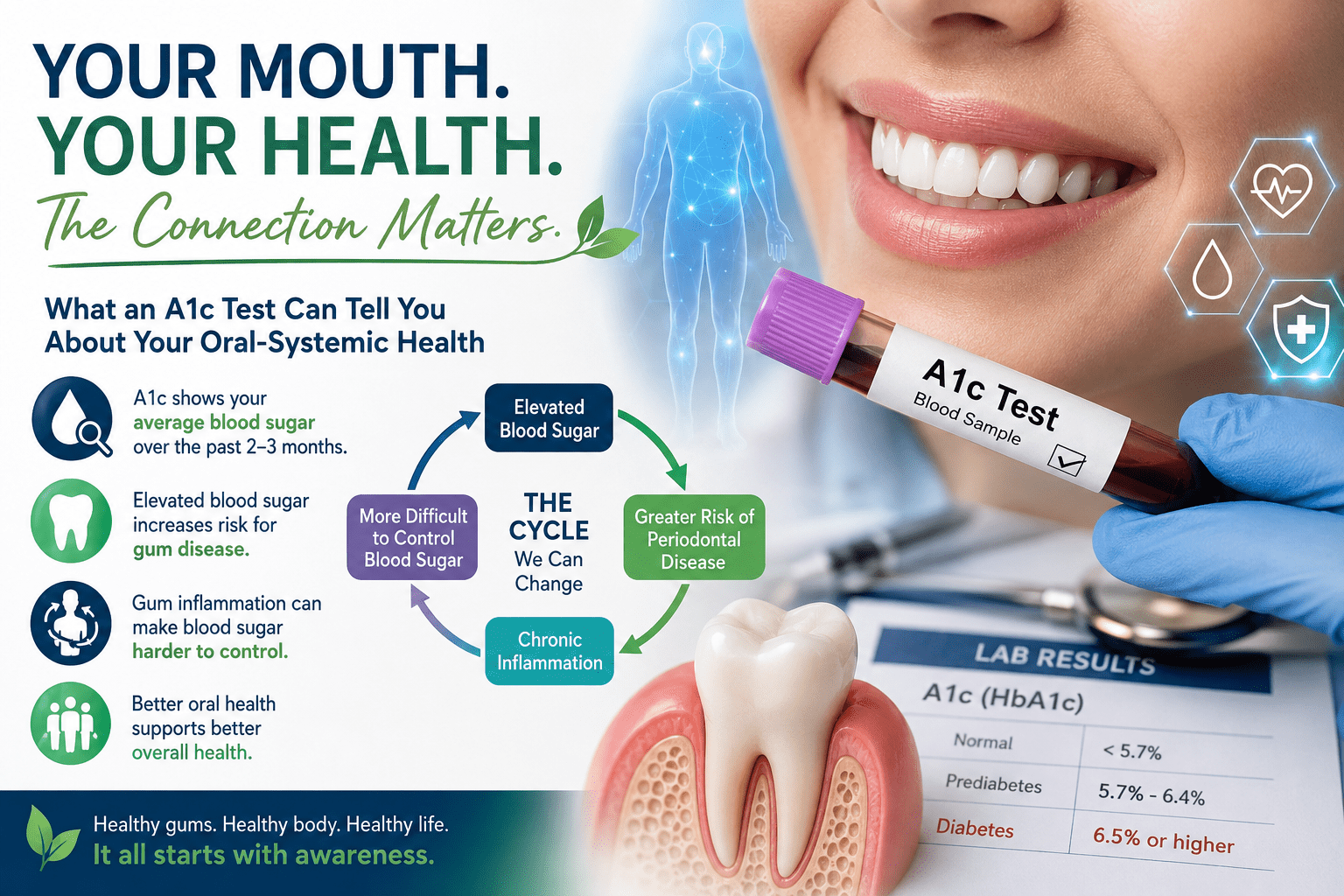
Periodontal Disease and Diabetes
The periodontal-diabetes relationship provides a powerful example.
Poor glycemic control can increase susceptibility to periodontal destruction and impair healing. At the same time, periodontal inflammation may make glycemic management more difficult.
This is why periodontal health should be part of the conversation when caring for patients with diabetes—and why the dental team needs to understand a patient’s metabolic health.
Measuring More Than Pocket Depth
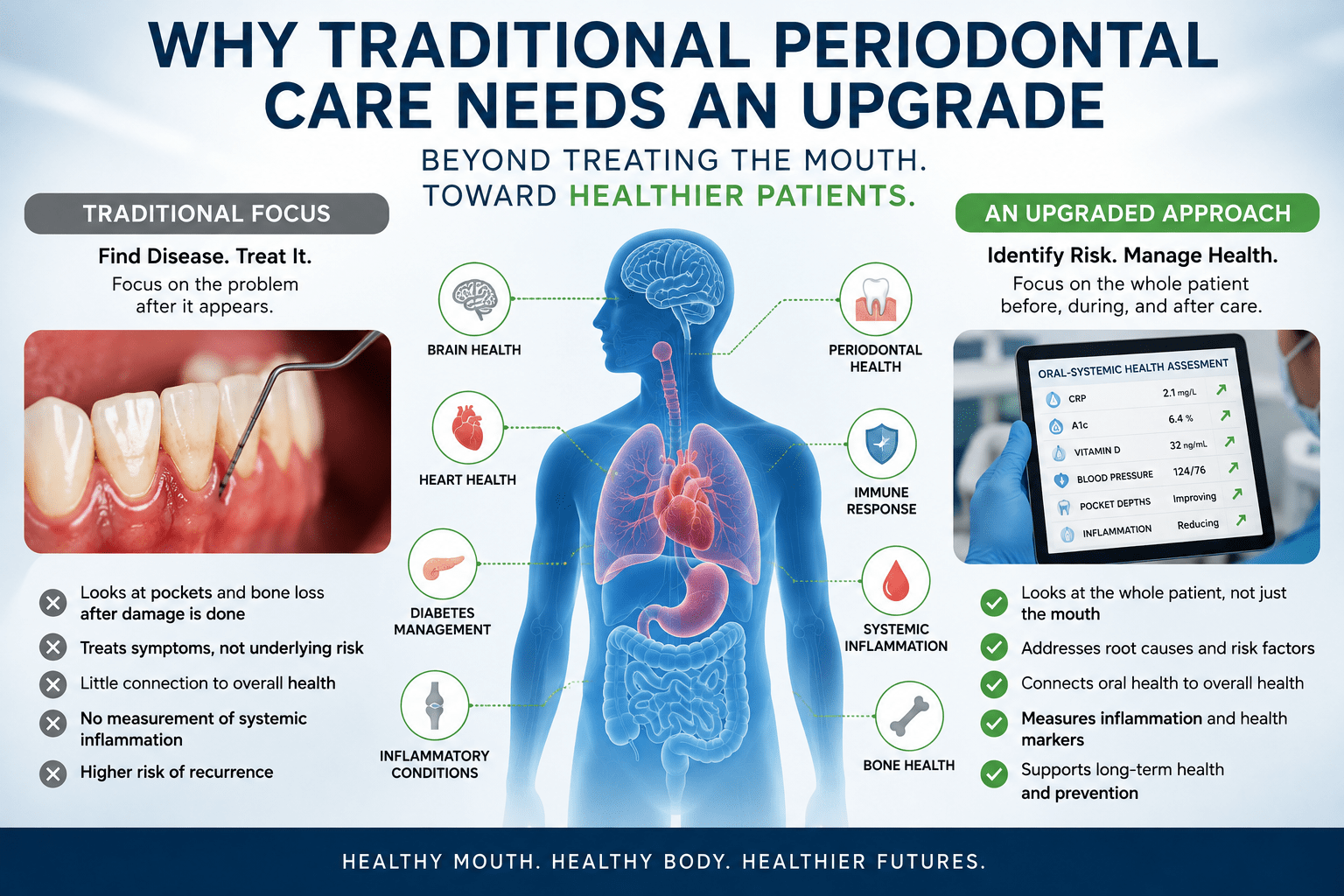
Pocket depth is important, but oral-systemic care asks us to look beyond one measurement.
A comprehensive periodontal picture may include:
- Bleeding on probing
- Pocket depths
- Clinical attachment
- Radiographic bone levels
- Suppuration
- Mobility
- Microbial findings when indicated
- Patient home-care effectiveness
- Smoking and lifestyle risks
- Diabetes and glycemic control
- Relevant medical conditions
- Changes in inflammatory risk over time
The objective is not simply to make the numbers look better.
The objective is to move the patient toward periodontal stability and maintain it.
Treatment Is Only the Beginning
Scaling and root planing, periodontal therapy, appropriate adjunctive technologies, and professional maintenance can reduce disease burden.
But successful periodontal management requires something else:
Long-term disruption of the disease cycle.
Patients need to understand why disease developed, what risk factors remain, how to maintain a healthier oral environment, and why periodontal maintenance cannot end when symptoms improve.
This is especially important before and after dental implants.
Replacing a tooth does not automatically eliminate the biological conditions that contributed to the loss of the original tooth.
If inflammation, microbial imbalance, systemic risk factors, and inadequate maintenance remain, the new implant enters the same biological environment.
From Treating Gums to Managing Health
The shift toward oral-systemic healthcare changes periodontal treatment from an isolated dental procedure into part of a larger prevention strategy.
At HCP Wellnet, we believe periodontal health should be viewed through that wider lens.
Reduce microbial burden.
Control inflammation.
Identify contributing risk factors.
Measure improvement.
Maintain health.
And when medical factors may be influencing the patient’s oral condition—or oral inflammation may be relevant to medical care—connect the healthcare professionals.
Periodontal disease begins in the mouth, but managing it well may matter far beyond the mouth.






Leave A Comment
You must be logged in to post a comment.